| ISBN: | 9780500203156 |
| Publisher: | Thames & Hudson |
| Published: | 28 February, 1999 |
| Format: | Paperback |
| Language: | English |
| Links | |
| Editions: |
1 other edition
of this product
|
- Impressionism
- Cubism
- Georgia O'Keeffe
- Bruegel
- Concepts of modern art (Icon editions)
- Concepts of modern art (Icon editions)
- Van Gogh
- Art of Tantra (World of Art)
- Italian Baroque Sculpture (World of Art)
- Baroque & Rococo
- The Body in Contemporary Art
- Fauvism (World of Art)
- The Arts in Spain (World of Art)
- Matisse (World of Art)
- Minoan and Mycenaean Art
- Minoan and Mycenaean Art
- The Thames and Hudson Dictionary of Fashion and Fashion Designers (World of Art)
- Egyptian Art (World of Art)
- Friedrich
- David Hockney (World of Art)
- Goya
- The Photograph as Contemporary Art (World of Art)
- Constable (World of Art)
- Camille Pissarro
- Photomontage (World of Art)







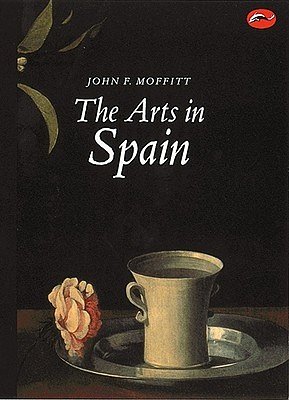
From the dawn of mankind's artistic achievement in the cave paintings of Altamira, to Picasso's groundbreaking Les Demoiselles d'Avignon and beyond, the arts in Spain tangibly illustrate the unique course of Spanish history. In this wide-ranging critical overview, John F. Moffitt concentrates on paradigms of painting, sculpture, the decorative arts, and architecture, situating them within their historical context.Professor Moffitt first traces Iberian and Roman beginnings and examines the Islamic and Christian foundations of Cordoba and the Escorial. He discusses the masterworks of El Greco, Zurbaran, Velazquez, and Goya, the innovations of Picasso, Dali, and Miro, and the advent of postmodernism in Spain. Authoritative and ambitious, the book encompasses the enormous breadth of the Spanish artistic panorama, revealing how many of its most characteristic modern traits were present in earliest times.