| ASIN: | B01K3HG86Y |
| Publisher: | Phaidon Press |
| Editions: |
2 other editions
of this product
|
- Art of the Byzantine Era
- Sexuality in Western Art (World of Art)
- Mujer, Arte Y Sociedad (Spanish Edition)
- L'Art Celte
- El Arte Etrusco (Spanish Edition)
- Sculpture Now
- The Russian Experiment in Art 1863-1922 (Revised Edition) (World of Art)
- History of Film (World of Art)
- Turner (World of Art)
- William Blake
- Graphic Design: A Concise History (World of Art)
- Indian Art (World of Art)
- Cezanne A&I (Art and Ideas)
- Dada & Surrealism A&I (Art and Ideas)
- Gauguin
- Van Gogh
- The Gothic Revival (World of Art)
- Movements in Art Since 1945
- Arts of southeast Asia
- Arts of Southeast Asia
- Movements in Art Since 1945
- Monet
- Dali
- Dali
- Dali





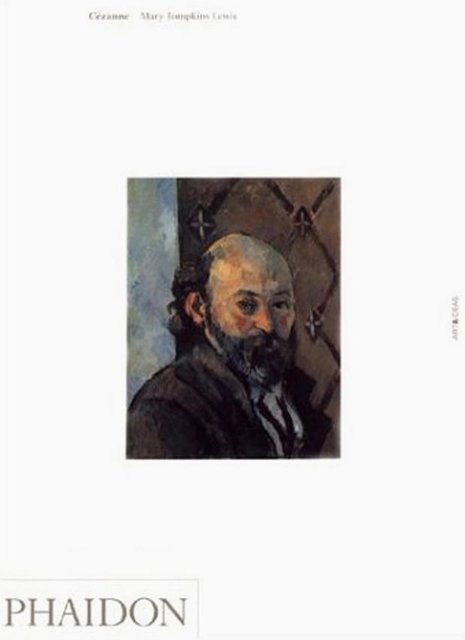
With his distinctive paintings of landscapes, figures and still lifes, Paul Cezanne (1839-1906) profoundly influenced the Cubists and the direction of twentieth-century art. In this lively account of the artist's life and work, Mary Tompkins Lewis traces Cezanne from his early years in Aix-en-Provence, struggling to become a painter in the face of opposition from his father, through his time in Paris studying the Old Masters and working with the Impressionists, to his later, reclusive years back in Provence, when he produced the pictures that made him the precursor of a new art.But however important Cezanne's work was for later generations, Lewis argues that it can be fully understood only in the context of both the social and historical circumstances of late nineteenth-century France, and the regional aspirations and tensions of Provence. This is the first study of Cezanne to bring biographical, formal and contextual approaches to bear on the artist's full career. In doing so, Lewis has shed new light on Cezanne as an artist of his own time and place.