| ISBN: | 9783836560566 |
| Publisher: | Taschen GmbH |
| Published: | 25 September, 2015 |
| Format: | Hardcover |
| Language: | English |
| Editions: |
5 other editions
of this product
|
| Genre: | Non-Fiction |
- El Art Deco
- Bosch
- The art of Mesoamerica
- The arts in Spain
- Cézanne
- Italian Architecture
- Gauguin
- Diego Rivera (Revised Edition)Getting to Know the World's Greatest Artists (P...
- Giuseppe Arcimboldo
- Alexander Calder
- Painting Now
- Edgar Degas
- Abstract Expressionism
- Greek ArtWorld of Art
- Chagall (Art & Ideas)
- Georgia O'Keeffe
- Modern Architecture: A Critical History (World of Art)
- No title
- Piero Della Francesca (Masters of Art Series)
- Early Christian & Byzantine Art: an Authoritive Account of Early
- Ensor
- Aboriginal Art
- Duchamp
- Delacroix
- Vermeer




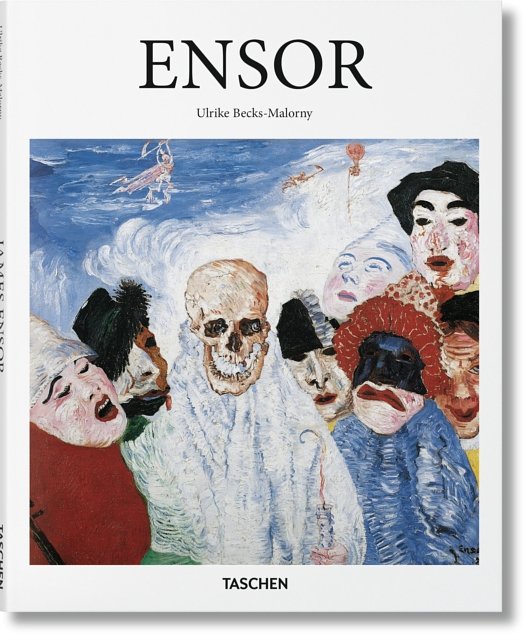
It was never a sure thing that James Ensor (1860-1949), the great Belgian painter of macabre and ghoulish scenes, would become a nationally revered figure. He was unusual in many ways. Apart from his training in Brussels, he spent his entire long life in Ostend, seemingly the opposite of cosmopolitan. Later on he was expelled by the group Les XX for a particularly controversial canvas: The Entry of Christ into Brussels, which he had painted in 1889. An expressionist before the term was coined, Ensor used the iconography of masks and skeletons to point up the essential horrors of life, and often underwrote his images with a sardonic gallows humour. It has been said that he appropriated the subject matter of a Bosch or Bruegel and revisioned them using the techniques of Manet or Rubens. But this is to diminish his own unique take on both art and experience. A genuine maverick in the way that so many Belgian artists are (lest we forget Magritte), James Ensor can claim a dark and distinctive place in the art histories of the last hundred years.