| ISBN: | 9783836504133 |
| Publisher: | Taschen GmbH |
| Published: | 25 September, 2015 |
| Format: | Hardcover |
| Language: | English |
| Editions: |
16 other editions
of this product
|
- Bonnard
- Bauhaus
- Abstract Expressionism and Other Modern Works
- Klimt
- Georgia O'Keeffe
- arts and crafts movement
- Marc Chagall
- sources of modern architecture and design
- Lucio Fontana
- Concepts of Modern Art
- Japanese art
- Francis Bacon
- Rivera
- Matisse
- Egon Schiele
- Design since 1945
- Baroque and Rococo
- Magritte
- Early Greek vase painting
- Thames & Hudson Dictionary of Art Terms
- David Hockney
- Greek Sculpture
- American Art Since 1945
- 20th century fashion
- Gauguin




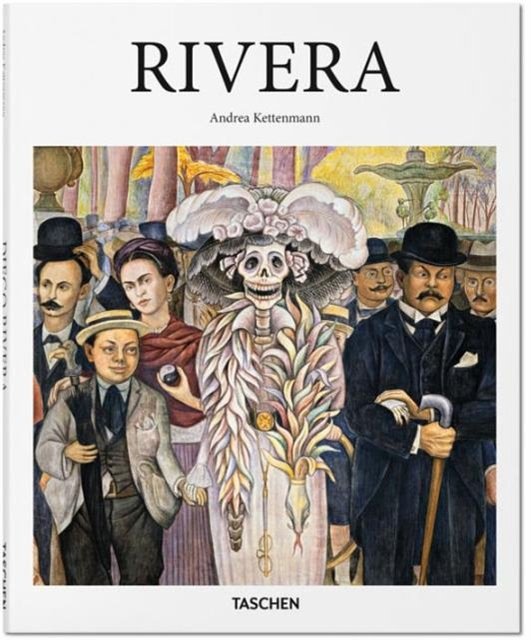
Diego Rivera (1886-1957) is a loud presence on the art historical stage. With devout political principles and a turbulent romantic history, he was at once husband and paladin of Frida Kahlo, advocate and adversary of Stalin's Soviet Union, and liberator and traitor of Leon Trotsky.Vibrant, graphic, and often monumental, Rivera's paintings carry the same live political and passionate charge as his personal biography. Fusing European influences such as Cubism with a socialist ideology and an exaltation of Mexico's indigenous and popular heritage, he created a new iconography for art history and for his country. He became one of the most important figures in the Mexican mural movement and won international acclaim for his public wall paintings, in which he presented a utopian yet accessible vision of a post-revolutionary Mexico. In 1931, Rivera was the subject of MoMA's second ever monographic exhibition.This book explores the unique blend of influence and ideology which secure Rivera's place as both a unique and a universal painter, bound to the particular turbulent experience of early 20th century Mexico, and yet preoccupied with subjects such as revolution and class inequity which continue to speak to us today.