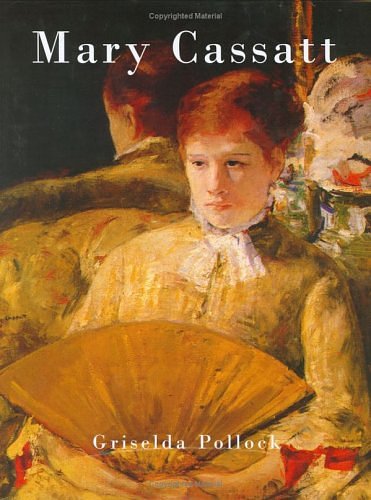
| ISBN: | 9781904449317 |
| Publisher: | Chaucer Press |
| Published: | 1 June, 2005 |
| Format: | Hardcover with Dust Jacket |
| Language: | English |
| Links | |
| Editions: |
12 other editions
of this product
|
- 19 Max Beckmann
- Modern architecture
- Conceptual Art
- Outsider Art
- Neoclassicism A&I
- Venetian Painting
- Van Gogh
- Modern Sculpture
- Turner
- Rembrandt
- American Art and Architecture (World of Art)
- The Pre-raphaelites
- Mary Cassatt
- Art Since 1960
- World textiles
- Dutch Painting
- Islamic art and architecture
- Greek Art A&I
- Greek art
- Bonnard
- Bauhaus
- Abstract Expressionism and Other Modern Works
- Klimt
- Georgia O'Keeffe
- arts and crafts movement







Born into the male dominated world of the nineteenth century, middle-class Pennsylvania society, Mary Cassatt became a feminist and turned what was a lady's accomplishment into a profession becoming a radical painter, working in Paris and exhibiting with the Impressionists. Degas, Manet, Gauguin and Pissaro, amongst others, knew and admired her work, and yet, since her death in 1926, Cassatt has received little critical acclaim, and her importance, both personally as an individual artist and historically within the evolution of the Impressionist movement, has largely been obscured. The efforts of the feminist movement in the last decade, however, have stimulated long-deserved public and critical interest in Mary Cassatt.Griselda Pollock examines the reasons for the unjust neglect of one of America's outstanding artistic talents. She gauges the wide variety of influences which shaped her career, from her commitment to her early oils and pastels and her study of the techniques of the Old Masters, her exploration of modernist ideas to her later interest in the methods of Japanese print-making. Despite the tremendous diversity of her sources, Cassatt pursued one theme - the depiction of women in all phases of their lives - defending the portrayal of maternity and womanhood from the charges of sentimentality. Pollock argues that through her oeuvre, Cassatt, a woman painting women, reworked with increasing power and insight the traditional iconography of woman as Madonna, as Venus and as Eve, questioning its basic assumptions and transforming women from objects to be looked at to people to be understood.